vehicles in operation
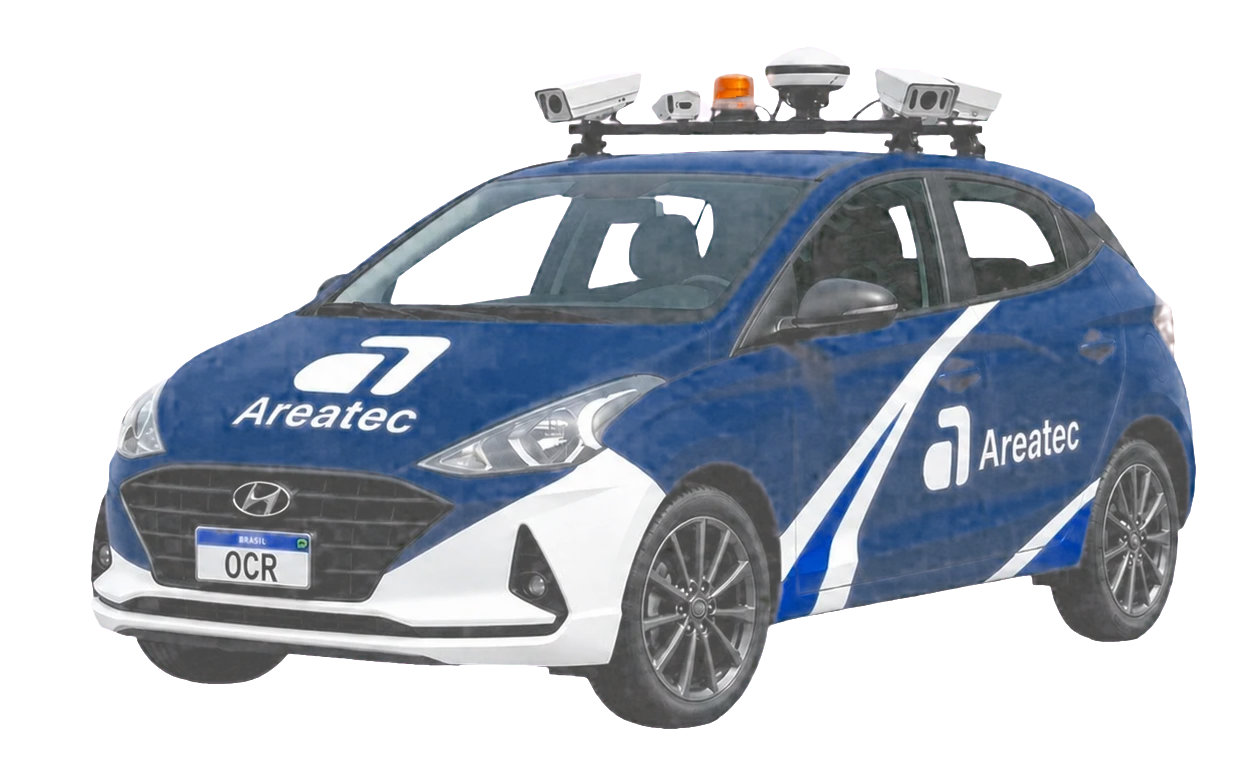
Aggregate Olho Vivo Patrol base operating with Areatec technology.
OLHO VIVO® PATROL · MOBILE ENFORCEMENT
Along the route, Olho Vivo Patrol reads license plates, records Brazilian R-6b regulatory signs and organizes the image, position, date, time and operational context.
Onboard processing prepares the information for Olho Vivo City, the operations center and validation by the responsible officers.
PROVEN OPERATIONAL SCALE
Olho Vivo Patrol's scale comes from live enforcement and parking operations. Its architecture was built to keep vehicles, control rooms and officers in one workflow.
Aggregate Olho Vivo Patrol base operating with Areatec technology.
The world's largest operating Olho Vivo Patrol fleet is concentrated in São Paulo.
Daily routes cover extensive areas while preserving the context of each capture.
Readings are organized for operations-center monitoring and officer validation.
SÃO PAULO · LARGEST OPERATION
In São Paulo, the fleet covers hundreds of kilometers and analyzes thousands of plates every day. It also records Brazilian R-6b signs to supplement the legal context used by officers when issuing traffic notices. The concessionaire's control room follows the operation and CET officers analyze the incoming images in real time.
Explore the São Paulo caseSão Paulo brings together the largest number of Olho Vivo Patrol vehicles in one deployment.
Estapar, Brazil's largest parking company, has been an Areatec client since 1996.
Field capture, operational monitoring and CET analysis work with information organized by the same architecture.
HOW IT WORKS
Each stage keeps the source and context of the record visible. Technology accelerates collection and organization; procedure and decisions remain with the responsible authority.
The operation configures the area, purpose, cameras, rules and integrations before the vehicle enters the field.
Cameras record plates, regulatory signs and the scene needed to understand each passage.
OCR and onboard models turn each capture into structured information while the vehicle is still on route.
Image, position, date, time, camera and confidence scores remain associated with the record.
The platform receives, relates and presents events to the operations center according to the project.
Authorized officers and teams review the information and apply the procedure defined by the authority.
END-TO-END ARCHITECTURE
Olho Vivo Patrol combines vehicle hardware, proprietary software and operational platforms. Every component has a clear role in the same chain.
Optics, positioning and calibration are defined for the route, speed and targets that must be observed.
Processing reads plates and interprets visual information inside the vehicle, reducing reliance on continuous transmission.
Checks the authenticity and consistency of location at the time of the record and binds its trust state to the capture.
Preserves digital fingerprints and event sequence when chain of custody is part of the project's architecture.
Organize incoming volume, operational rules, authorized analysis and the actions defined by the authority.
FIELD MISSIONS
Purpose comes before technology. Cameras, models and integrations are configured for the work the city needs to perform.
Covers regulated areas, reads plates and supports enforcement of parking-session and dwell-time rules.
See Olho Vivo ParkingRecords plates and Brazilian R-6b signs to support enforcement with visual and geographic context.
See enforcementThe same route can organize indications involving pavement, signs and urban assets when that purpose is part of the project.
See Urban MaintenanceFIELD OPERATIONS
These cases show different configurations of the same product: metropolitan scale, parking enforcement and direct concession operations.
SÃO PAULO · SP
Around 100 ALPR vehicles, hundreds of kilometers and thousands of plates analyzed every day.
Open caseRIBEIRÃO PRETO · SP
Olho Vivo Patrol, Olho Vivo City, Electronic Ticketing and Digipare in one urban operation.
Open caseCUIABÁ · MT
Two ALPR vehicles are part of the operation co-owned by Areatec, alongside digital channels and 86 parking meters.
Open caseVOLTA REDONDA · RJ
One Olho Vivo Patrol works with parking meters, retail points and Electronic Ticketing in the concession operated with Sinalvida.
Open caseAREATEC ENGINEERING
The product grew out of field operations. Results depend on both reading performance and the ability to integrate, monitor and maintain the entire operation.
OCR, visual models and integration components evolve within the same product engineering team.
Cameras, processing, storage and connectivity are sized for each mission and vehicle.
Olho Vivo City, APIs and workflows connect the route to the teams responsible for analysis.
Source, camera, time, position and processing states follow every relevant piece of information.
Purpose, access, retention and review are defined in the operational design and applied by profile.
Calibration, acceptance testing, training and technical monitoring are part of delivery.
CAPACITY REFERENCES
The references below guide initial engineering. Final configuration comes from the route, mission, vehicle and acceptance plan.
FREQUENTLY ASKED QUESTIONS
Direct answers about OCR, speed, operation, privacy, Pintrust, AreaChain and officer responsibility.
In some Spanish-speaking markets, the terms "cepo virtual" and "cepo digital" are used for camera and OCR enforcement systems. Olho Vivo Patrol does not immobilize the vehicle: it reads the plate along the route and compares the record with authorized databases. If there is a possible irregularity, it gathers the data for review under the local authority's rules and procedure.
“Ticketing car” is a popular label for camera-based enforcement vehicles. Olho Vivo Patrol reads plates, associates time and location and can flag a possible irregularity. A reading does not become a fine by itself: the action depends on legislation, the contracted purpose and the competent authority's validation procedure.
“Spy car” is a media label, not a technical definition. A responsible project limits capture to the authorized purpose, minimizes data, controls access and defines retention and disposal. The more precise technical name is mobile ALPR vehicle or parking enforcement vehicle.
OCR enforcement uses vehicle-mounted or fixed cameras to capture license plates. Aretron extracts the characters, records the confidence level and compares the reading with databases the authority is legally permitted to consult, such as paid parking activations. A possible irregularity becomes a record for validation under the municipality's procedure; the reading alone does not automatically issue a fine.
In tests conducted with our OCR, we achieved 98.7% accuracy in license plate reading. This is a test result, not a universal percentage for every scenario: resolution, speed, lighting, angle, plate condition, camera installation and configuration all affect the reading. For each project, we confirm performance with a sample representative of the actual route and acceptance criteria defined for the operation.
Beyond plate reading, the vehicle can include modules for detecting pavement defects, inventorying signs, mapping urban assets and capturing georeferenced panoramic images. The combination depends on the hardware, contract and authorized purpose. Features that process personal or biometric data require a legal basis, necessity assessment, access controls, defined retention and human governance consistent with data-protection law.
Infrared illuminators and specific settings may allow license plates to be captured in low light. Nighttime quality varies with distance, speed, glare, rain, plate condition and the installed setup. The project must test these factors along the route and adjust confidence limits before using a reading for enforcement.
Telemetry brings together route coverage and the condition of the onboard system: connectivity, cameras, processing, storage and power. For compatible vehicles and interfaces, it can also receive speed, RPM, temperature, voltage, consumption and fault codes. Each project defines which signals and thresholds produce alerts; acceptance is performed on the contracted vehicle and route.
We use a proprietary computer-vision algorithm in the driver-monitoring module. When contracted, configured and authorized for that purpose, it analyzes the internal camera and can identify signs consistent with fatigue, such as prolonged eye closure, yawning and head tilt, as well as mobile-phone use and the presence of an unauthorized passenger. Because processing can run in the vehicle, we control event classes, thresholds and data destinations without sending every image to an external AI service. We can also develop and validate new rules, such as prolonged inattention, camera obstruction or an identity mismatch, according to project needs. Each use is subject to acceptance testing and definitions of purpose, lawful basis, data minimization, access control, retention and audit consistent with data-protection law. The result is an operational alert; it is not a medical diagnosis and does not replace human assessment or response.
Aretron is Areatec's artificial intelligence engine for processing images in the vehicle itself. Depending on the contracted configuration, it can perform license plate reading, pavement-defect detection and signage assessment without sending every raw image to the cloud. Latency, concurrency and quality are measured on the hardware and under the conditions planned for the project.
Authorized imagery may produce georeferenced indications of potholes, cracks, patches or subsidence for triage. DNIT technical terminology may guide the categories used, but system classification does not replace field inspection, measurement, an engineering report or the authority's decision. Scope and criteria are verified in acceptance testing.
Olho Vivo Patrol provides resources for a privacy-oriented deployment, such as onboard processing, access roles, audit logs, configurable retention and anonymization in workflows where it is specified. Compliance does not come from the product alone: the project must define purpose, legal basis, necessity, authorized operators, sharing, retention and data-subject handling.
Pintrust checks the coherence of the position declared at capture and compares independent sources to flag signs of spoofing, simulation or replay. When configured for the authorized workflow, it authenticates that position and creates a certificate binding coordinates, time, device and the file fingerprint. AreaChain preserves that certificate and its sequence. These records support review; admissibility and evidentiary weight also depend on preservation of the original file, access controls and the competent authority's procedure.
AreaChain records the cryptographic hash and sequence of events selected for the authorized workflow, such as photos, license plate readings or coordinates. During an audit, the system recalculates the hash and compares it with the recorded value; a mismatch shows that the content changed. The trail supports integrity and order checks, but it does not replace access controls, preservation of the original file or legal assessment of the case.
Olho Vivo PTT is an IP communications product integrated with field equipment and the operations center. It brings together push-to-talk voice plus voice, text and video messages in authorized channels. Aretron analyzes voice characteristics and, when it notices a change in tone against configured parameters, routes an alert to the person registered in the workflow. Protection includes military-grade encryption, authentication, channel segregation, audit records and project-defined retention.
AreaFACE is an individual 1:1 check: the person in front of the tablet is compared with one selected reference, including local liveness signals. Facial search is a separate workflow. An authorized reference comes from Olho Vivo City and Patrol looks for a match during the defined route. A result above the configured threshold sends location, time and equipment for human validation; other faces are anonymized at the source.
The number of readings per hour depends on route length, permitted speed, vehicle density, the number and position of cameras, occlusions and the need for repeat passes. Sizing should separate total captures from unique plates and define capacity in a representative field test. This allows the manager to compare coverage and quality without treating a laboratory figure as a universal promise.
A dedicated operator is not required to perform the capture. Olho Vivo Patrol was designed to work automatically while the driver focuses solely on driving: the cameras capture, Aretron processes and the system records events without continuous typing. This does not mean that the software determines the enforcement staffing model. Officer presence, human review and authority to issue or validate each action follow applicable law and the rules of the city or responsible authority. We configure the workflow, profiles and validation stages according to the premises approved for each project.
We integrate with leading traffic-citation processing companies in the Brazilian market and with environments maintained by state traffic authorities. Each connection is implemented only with systems and databases the authority is authorized to use. Depending on the specification approved for the project, we use APIs, web services, webhooks, structured files or secure queues to send plate readings, images, location, date, time, confidence and other authorized metadata, as well as to receive the lists and responses required by the workflow. Authentication, encryption, formats, retries, acknowledgements, cadence and audit records depend on the responsible provider and the authority's procedure. This does not imply a universal connection to every database: each integration requires credentials, technical approval, acceptance testing and defined responsibilities.
Autonomy depends on the vehicle, alternator, battery, number of cameras, processing load and operating temperature. The project sizes power supply, discharge protection and local storage for the planned shift. Field tests confirm how long the system operates and how much data it can retain without synchronization; telemetry monitors voltage, temperature and maintenance alerts.
PURPOSE-BUILT PROJECT
Tell us the area, mission, fleet and planned integrations. Areatec turns those conditions into architecture, an acceptance test and a deployment plan.