TECHNOLOGY · CAPTURE AND RECOGNITION
LPR technology: what lies between the camera and a plate reading

LPR is neither just a camera nor just OCR. It combines capture, processing, output criteria and integration to deliver a useful event in real operating conditions.
OCR / LPR
On this page
LPR means license plate recognition. ALPR and ANPR add the idea of automation; OCR describes character reading. A project should document what will be captured, measured and delivered instead of relying on an acronym.
CAPTURE
Camera, optics and installation define the available information
Nominal resolution is not enough. Distance, angle, lens, exposure, lighting, vibration and speed determine how many useful pixels represent each character.
A low-speed access-control configuration may be unsuitable for a moving urban route. Testing must reproduce the geometry and conditions of the intended operation.
PLATES
Known formats support validation; real diversity belongs in the sample
Plate standards guide proportions, character counts and expected combinations. Condition, mounting, dirt, glare, accessories and foreign plates still alter the image.
The acceptance sample should include variations the operation will actually encounter, not only clean front-facing images.
PROCESSING
Edge processing can reduce traffic and support continuity
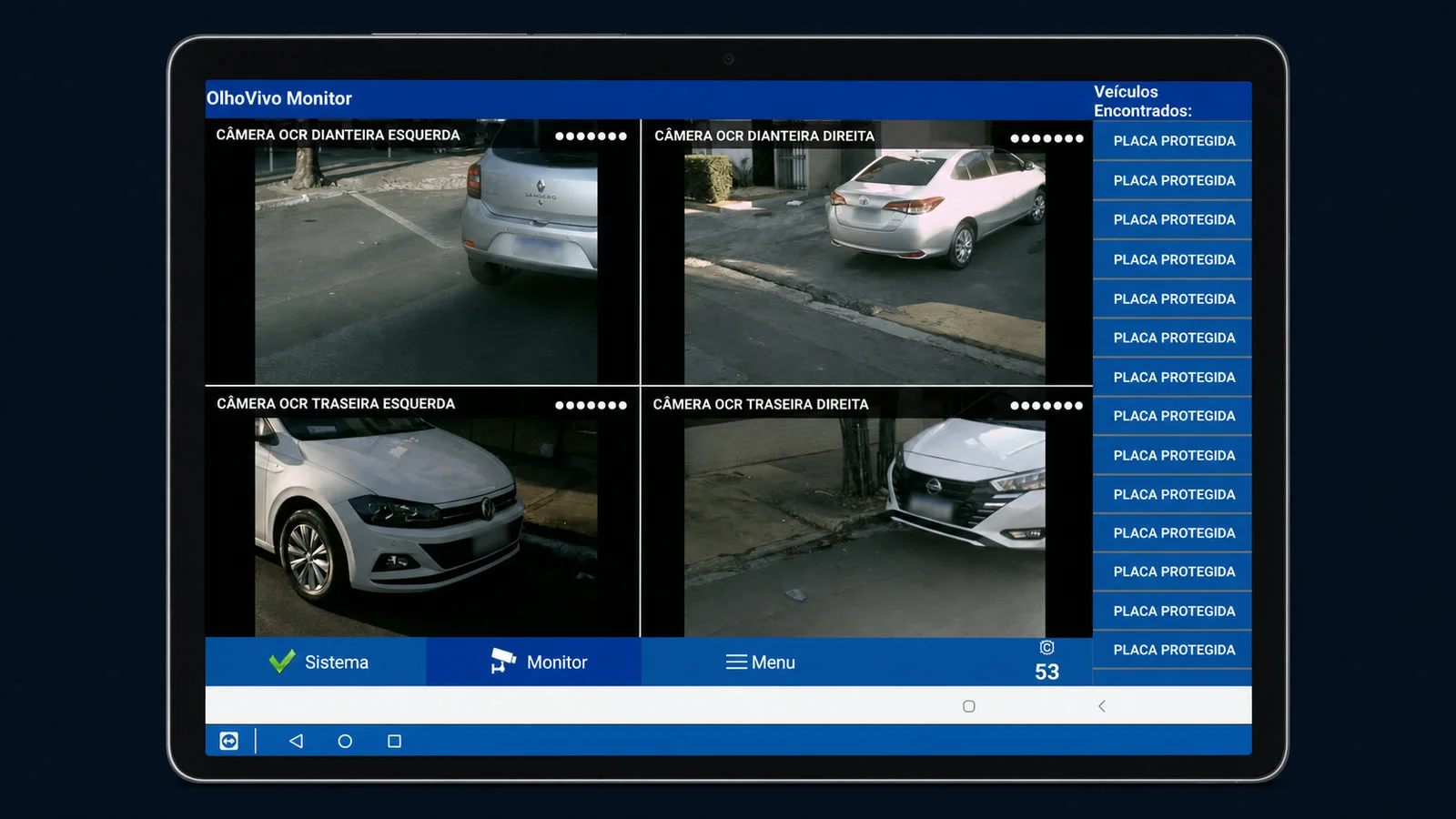
Onboard processing can structure readings near capture and maintain a local queue when connectivity fluctuates, depending on the contracted architecture. It does not remove the need for synchronization, observability and conflict handling.
Channel capacity, latency and resource use need to be assessed together. Adding cameras, resolution or frames changes system load.
INTEGRATION
Reading event, query and decision should remain separate
An API or SDK can carry the reading and context into another system. When an external source is authorized, that query occurs as an identifiable step. Operational rules and decisions form other steps with their own records.
This separation supports audit, reprocessing and correction without assigning a decision to OCR that it did not make.
PURPOSE AND CONTROL
The project begins with purpose, not indiscriminate collection
The configuration should define which data are necessary, who can access them, how long they remain available and how they are protected. Technical possibility does not by itself authorize every use.
Vehicle OCR, with distinct search intents
Continue with the right topic
Each chapter answers a different question about automatic license plate recognition.
From explanation to operation
Explore related solutions
Direct answers
Frequently asked questions
What is the difference between LPR and OCR?
OCR recognizes characters in images. LPR describes a system designed to locate and read plates, using OCR or an equivalent technique within a broader workflow.
Do ALPR and ANPR mean different things?
Both terms are used for automatic plate recognition. ANPR is more common in some markets and ALPR in others. The contract should describe capabilities and criteria without depending on the acronym.
Does higher resolution always improve recognition?
Not in isolation. Lens, distance, focus, motion, lighting and processing also matter. Higher resolution also increases data volume and computing load.
Does infrared illumination solve every night condition?
No. It can help in suitable configurations, but angle, distance, glare, rain, dirt and plate characteristics remain relevant. Results must be tested in the contracted scenario.
Does the API return vehicle registry data?
Visual recognition returns what was read and its context. Registry data depend on a separate authorized source, purpose and integration.