PROCESS · FROM SCENE TO EVENT
How vehicle ALPR works
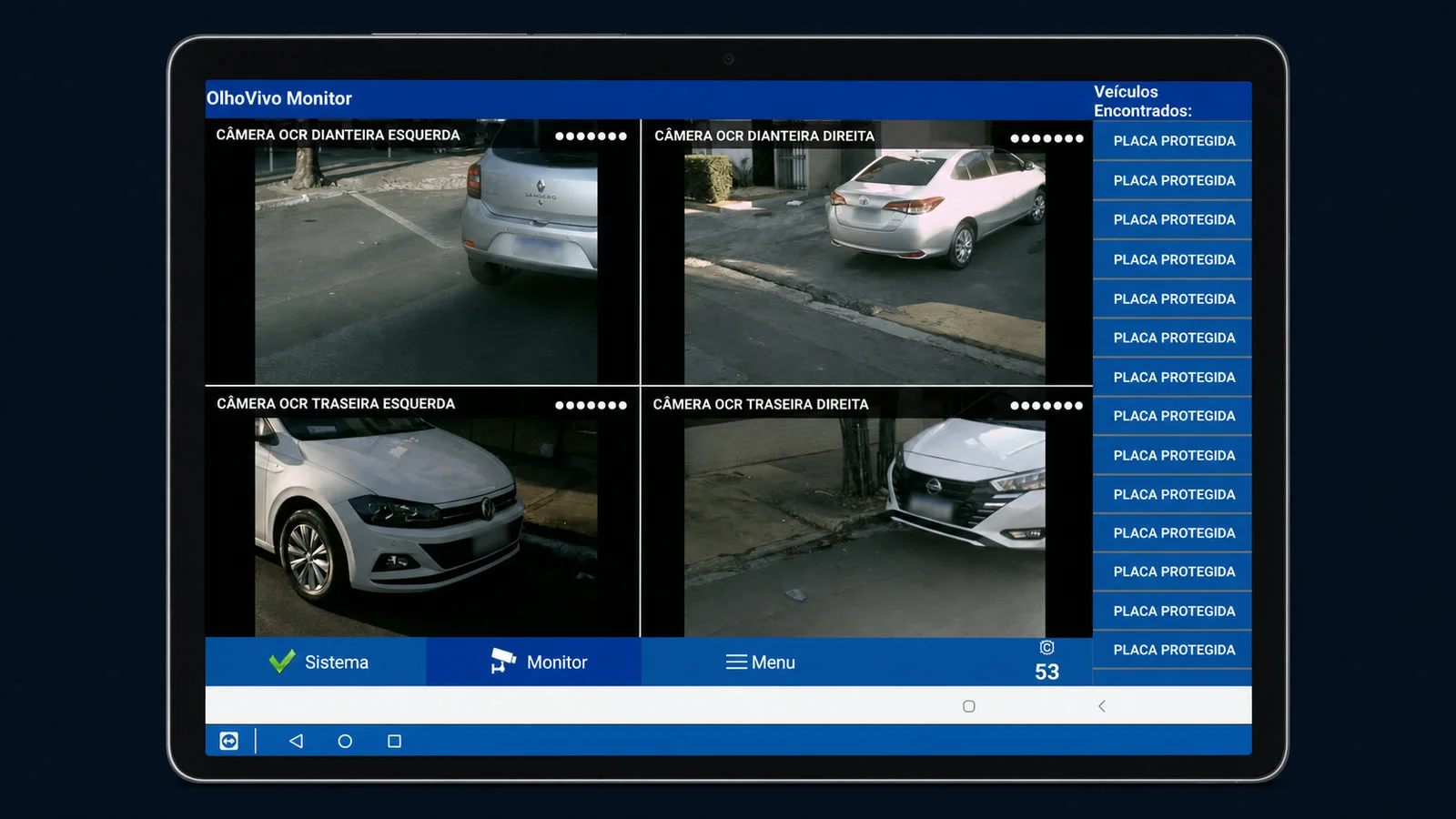
Recognition is not a single step. The system turns a scene into plate candidates, interprets characters and delivers an event that still must meet the criteria for its intended use.
OCR / LPR
On this page
Names and implementations vary, but a plate-reading workflow usually contains recognizable stages. Separating them helps locate the source of an error and define a useful acceptance test.
STAGE 01
Capture: quality begins before recognition
Field of view, distance, focus, exposure, stabilization and lighting determine what information exists in the image. Processing cannot reliably recover a character that was not captured with sufficient detail.
Camera position should account for direction of travel, height, expected speed and the types of plates included in scope.
STAGES 02 AND 03
Location and normalization: crop the plate and reduce distortion
The system searches for regions consistent with a plate. Each candidate can be cropped and adjusted for perspective, contrast and orientation within the limits of the captured information.
This stage should reject look-alike objects when evidence is insufficient. Treating every rectangle as a plate increases false positives downstream.
STAGE 04
Recognition: interpret the visible sequence
After locating the plate, OCR estimates the characters and their order. Known formats may support validation, but they should not be used to invent a missing character.
The result can include hypotheses and confidence. The project defines when to accept, route for review or record the event as inconclusive.
STAGES 05 AND 06
Context and output: preserve what makes review possible
An isolated string offers little auditability. Depending on the contracted design, an event may associate the image, crop, time, camera, route, available position and quality indicators.
External queries, business rules and administrative decisions happen later and should remain distinguishable from visual recognition.
- Reading accepted, marked inconclusive or sent for review.
- Local queue and synchronization when connectivity returns, when included.
- State trail distinguishing capture, send, confirmation and decision.
ERROR ANALYSIS
Where an error begins determines how it should be corrected
An out-of-focus plate calls for capture changes. A non-plate object accepted as a plate calls for detection analysis. A swapped character on a clear plate calls for recognition analysis. Combining these classes into one rate explains very little.
Vehicle OCR, with distinct search intents
Continue with the right topic
Each chapter answers a different question about automatic license plate recognition.
From explanation to operation
Explore related solutions
Direct answers
Frequently asked questions
Does ALPR read the entire image at once?
The workflow normally locates candidate regions and then interprets the cropped plate. This separation makes it possible to measure whether failure occurred in plate detection or character recognition.
Can plate format automatically correct a reading?
A format can support validation, but it should not replace missing visual evidence. Uncontrolled automatic correction can turn an inconclusive reading into a plausible false positive.
Why keep the full frame as well as the crop?
The scene helps review context, plate position and possible occlusions. What should be retained, for how long and under which access rules depends on purpose and project controls.
Does edge processing remove the need for connectivity?
It can reduce dependence during capture, but remote queries and synchronization still require connectivity. Queues, retries and reconciliation need to be tested on the contracted configuration.
Does a high-confidence reading remove the need for review?
Not necessarily. The threshold depends on risk and use. Confidence is a system indicator, not legal proof or a guarantee that the string is correct.