ENFORCEMENT · A READING IS NOT A CITATION
Vehicle ALPR in electronic enforcement
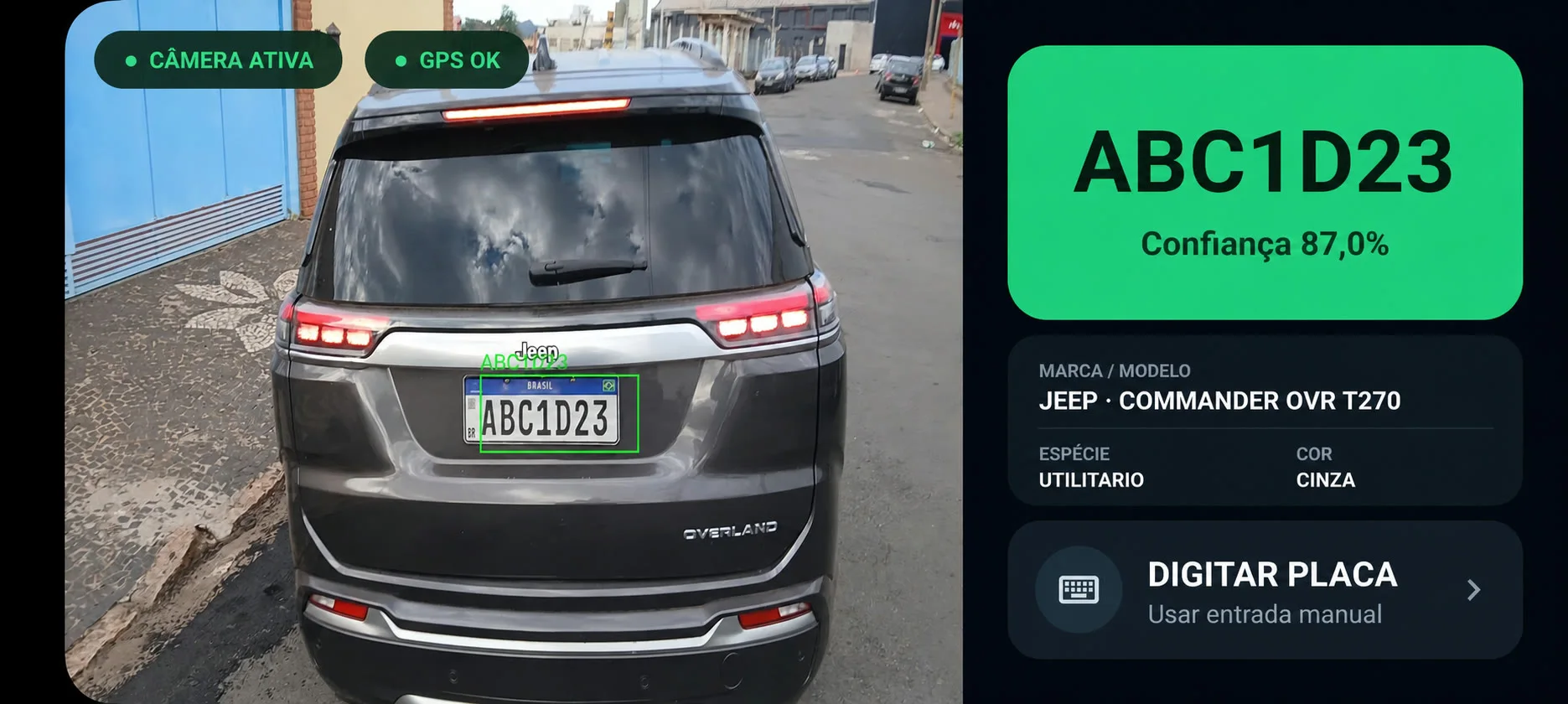
Recognizing a plate can help organize an event. Establishing a violation, preparing a report and later acts depend on classification, evidence, authority and applicable regulation.
OCR / LPR
On this page
The central requirement is to keep three things separate: what the image allows the system to read, what a rule or person establishes, and what the authority records in the administrative procedure.
THREE LAYERS
A reading event, an indication and a violation report are not synonyms
An ALPR event contains a plate hypothesis and context. A query or rule may flag a situation for analysis. A violation report is a formal act with its own requirements and does not arise merely because characters were recognized.
Keeping these states separate supports review, correction and audit without assigning an administrative decision to the visual engine.
- Reading: visual string, image and available indicators.
- Analysis: comparison with a rule, authorized source and required evidence.
- Procedure: record by the competent authority or enforcement officer, as applicable.
BRAZILIAN TRAFFIC CODE
Article 280 defines report content and who may establish a violation
The CTB specifies information for a violation report, including classification, place, date and time, plate characters and identification of the authority, officer or equipment that establishes the violation, as applicable.
The technical configuration must serve the authority's procedure. This page does not replace legal and operational review of a specific deployment.
CONTRAN RESOLUTION 909/2022
Video monitoring has its own legal basis and conditions
Resolution 909 governs traffic enforcement through video monitoring on roads provided with traffic signs. The authority or officer must follow the specified procedure and consider the conditions of the road and violation classification.
This does not turn every camera or ALPR reading into an enforcement instrument. A project must identify the technology and procedure it actually uses.
CONTRAN RESOLUTION 920/2022
SAnMFT is not the same as video monitoring
Resolution 920 addresses automatic non-metrological traffic-enforcement systems, known in Brazil as SAnMFT. Inmetro explains that they detect one or more violations through an automatic non-metrological method, while video monitoring involves remote establishment by an authority or officer.
Regulatory classification depends on the function actually configured. ALPR is a reading capability; its use within a system does not by itself classify the whole system.
OPERATIONAL DESIGN
The system should preserve context and route decisions to the correct owner
A deployment may capture the event, query a permitted source, apply operational filters and present required evidence for analysis. The authority defines competence, review, retention, signature, notice, defense and later stages.
Electronic Citation owns the recording and formalization workflow. Olho Vivo Patrol owns the complete vehicle. This page explains the regulatory boundary of ALPR.
Vehicle OCR, with distinct search intents
Continue with the right topic
Each chapter answers a different question about automatic license plate recognition.
From explanation to operation
Explore related solutions
Direct answers
Frequently asked questions
Does an ALPR reading automatically issue a citation?
No. Recognition reads characters. Establishment, classification, the violation report and later acts depend on the system, evidence, authority and applicable procedure.
Does CONTRAN Resolution 909 allow any camera to issue citations?
No. It governs video-monitoring enforcement on roads provided with traffic signs and establishes a specific procedure. Technology and the concrete use must comply with applicable regulation.
What is the difference between video monitoring and SAnMFT?
Under Inmetro's explanation, video monitoring involves remote establishment by an authority or officer; SAnMFT detects violations automatically through a non-metrological method. Classification depends on the actual system function.
Is vehicle ALPR always a SAnMFT?
No. ALPR is a capability for locating and reading plates. System classification depends on how that capability is configured and used, not merely on the presence of ALPR.
Does the displayed image prove product accuracy?
No. It documents an anonymized real screen and one individual reading. The plate was replaced with a synthetic one, and 87% is not an average, benchmark or performance guarantee.
Verifiable references
Sources consulted
- Lei nº 9.503/1997 — Código de Trânsito Brasileiro Presidência da República do Brasil
- Resolução CONTRAN nº 909, de 28 de março de 2022 Conselho Nacional de Trânsito
- Resolução CONTRAN nº 920, de 28 de março de 2022 Conselho Nacional de Trânsito
- Diferença entre videomonitoramento e SAnMFT Instituto Nacional de Metrologia, Qualidade e Tecnologia