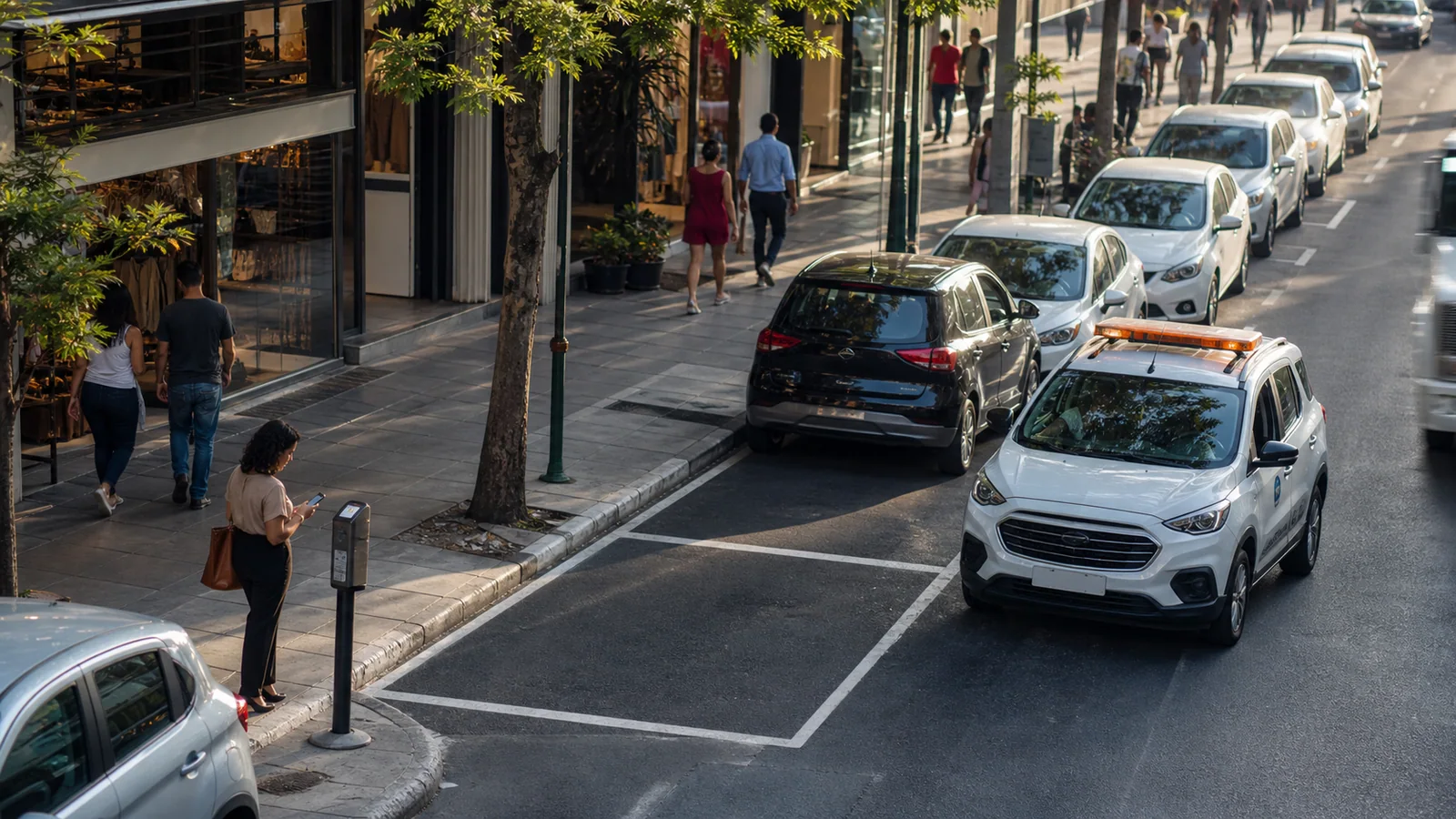
Metered parking manages a scarce resource: the curbside space. When demand exceeds supply, limiting the length of stay allows more people to reach shops, public services, schools, and healthcare facilities throughout the day. Digitalization does not change that purpose. It changes the city's ability to measure street use, make payment easier, and audit the operation.
Results depend on three decisions that must move together. The city needs consistent rules for each area, accessible payment options, and an enforcement procedure that everyone understands. Installing an app without a parking-space inventory, or putting an OCR vehicle on the street without a planned route, produces technology but not management.
From paper tickets to verifiable records
In a manual operation, ticket sales, activation, and inspection are separate steps. Paper tickets can be filled out incorrectly, reused, or simply left out of the consolidated report. The municipality receives the information after the fact and has little ability to reconstruct what happened on a particular street at a particular time.
In a digital system, every parking session has a license plate, start time, duration, zone, and payment method. Digipare lets drivers activate a session from their phones, while points of sale and self-service terminals support people who cannot or prefer not to use the app. The availability of each channel, time increments, and any credit for unused time depend on municipal rules and the configuration chosen by the city.
This record reduces discrepancies between sales and actual use. It also makes it possible to verify exemptions and special conditions without relying on printed lists. An authorization for residents, older adults, people with disabilities, or another group covered by local rules can include its valid area, period, license plate, legal basis, and expiration date. Before making a decision, the manager can distinguish an active benefit from an expired registration or use outside the authorized zone.
How the ecosystem operates on the street
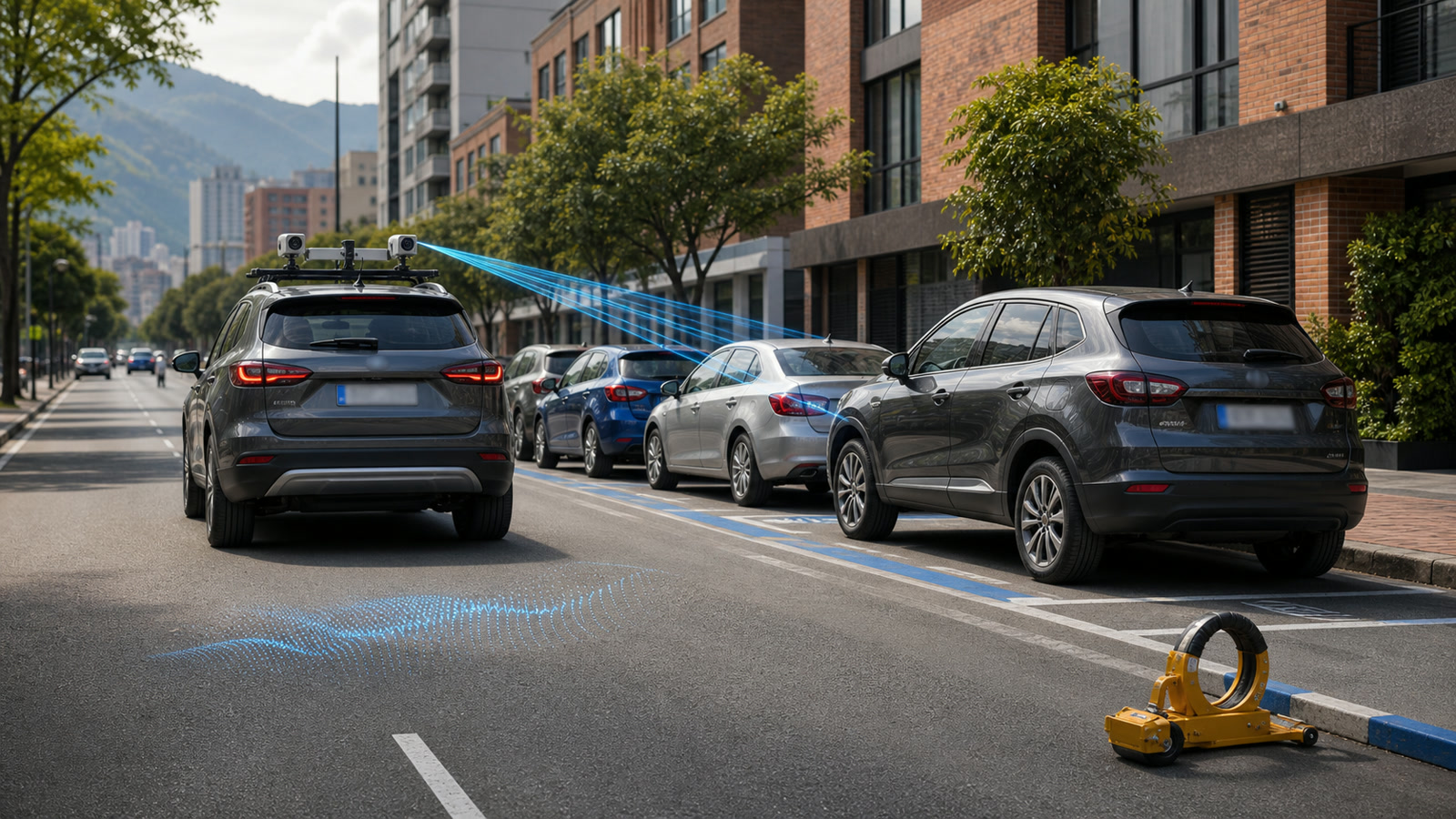
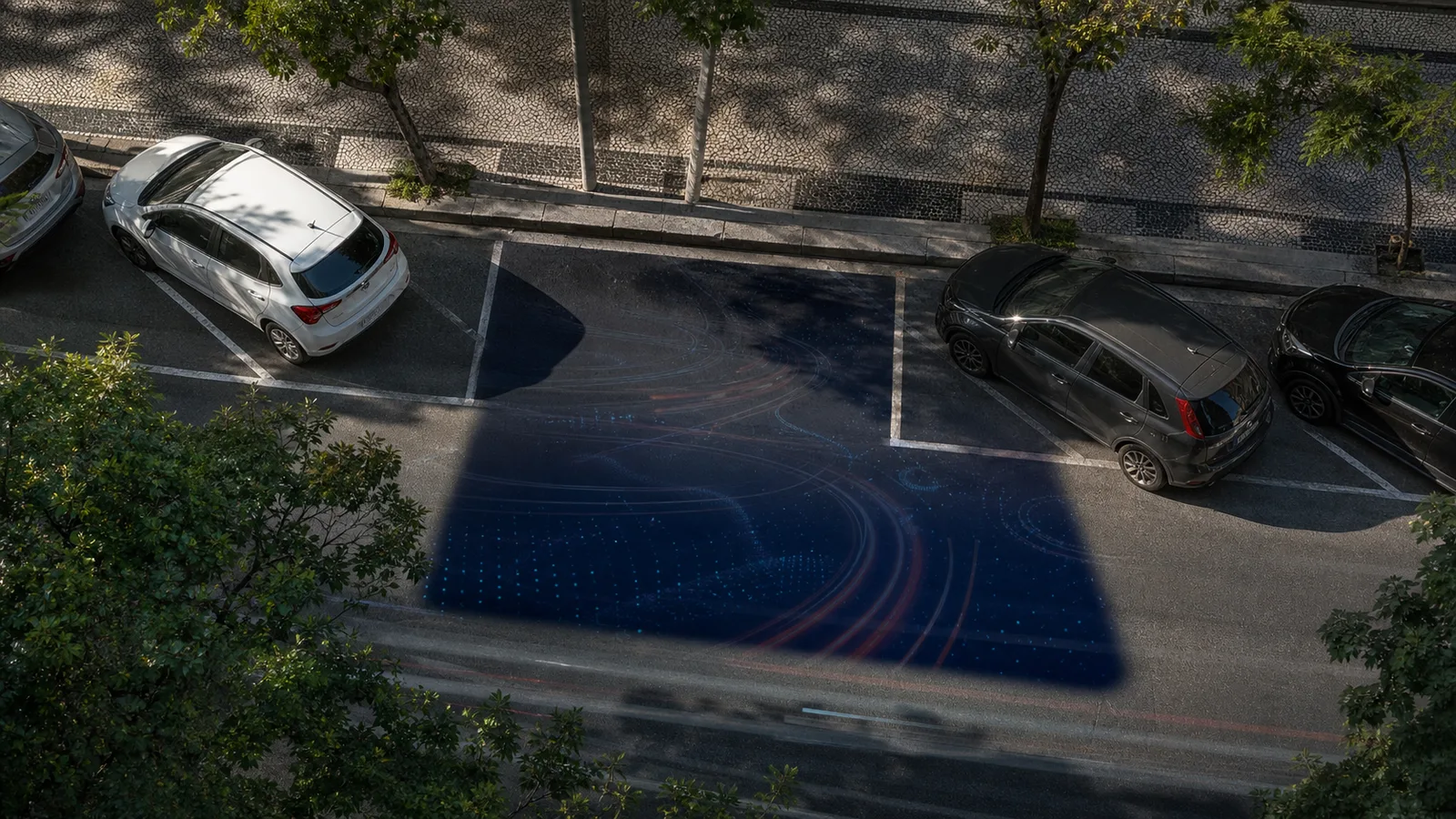
Olho Vivo Parking brings together payment, the parking-space inventory, enforcement, and performance indicators. Olho Vivo Patrol covers the routes with license-plate reading cameras. The Aretron engine supports image processing, and AreaDetect sensors can add continuous presence measurements in the spaces where they are installed.
A plate read is not, by itself, a traffic violation. It must be associated with the correct segment, checked against the applicable parking sessions and authorizations, and processed under the procedure established by the competent authority. CONTRAN Resolution No. 920/2022 establishes requirements for automatic non-metrological enforcement systems, including mobile systems, and assigns the authority with jurisdiction over the road responsibility for the system's location, installation, and operation. Technology collects and organizes data; the authority remains responsible for classification and administrative proceedings.
An unstable cellular connection should not interrupt collection. Onboard processing maintains capture along the route and sends records when communication is available. Controls such as Pintrust and AreaChain can form part of a record's origin, time, and integrity trail, depending on the contracted architecture. These mechanisms support audits, but they do not replace operational review or legal requirements.
Manual enforcement and OCR serve different purposes
Comparing a walking officer with a vehicle solely by the number of plates read leads to an incomplete conclusion. The vehicle covers a larger area and collects observations in sequence. The officer speaks with the public, checks an unreadable plate, examines an ambiguous situation, guides local businesses, and handles cases that require a person at the scene.
A scenario illustrates the difference in scale. If a route is 7 kilometers long and must be completed in 15 minutes, its average cycle speed is 28 km/h. At a hypothetical density of 220 regulated spaces per kilometer, each pass offers 1,540 observation opportunities. Four passes in one hour would produce up to 6,160 potential observations.
That figure does not represent unique plates or guaranteed capacity. The same plate may appear in several rounds, and actual output falls because of traffic lights, congestion, turns, segments without spaces, obstructed vehicles, roadwork, and image conditions. The calculation is a way to test a route on paper. Operational capacity must be measured in a pilot under the city's actual times and constraints. The method is explained in the Portuguese article Como dimensionar uma rota de fiscalização OCR.
When the vehicle handles repetitive collection, officers can focus on record validation, complex cases, and segments identified by the indicators. This allocation does not remove the street team. It directs human time to situations that require judgment, public assistance, or intervention.
Occupancy by zone and time changes the decision
A citywide average usually hides the problem. A commercial area may be saturated between 10 a.m. and noon while a nearby street remains underused. In the afternoon, that relationship may reverse. The system therefore needs to measure the Occupancy Rate and Compliance Rate by segment, time band, and type of space.
These readings support changes to routes, maximum stay, communication, and the distribution of payment channels. They also show where an exemption is being used, which sectors have a concentration of expired authorizations, and where the parking-space inventory no longer matches the street. Before discussing expansion or pricing, the municipality can distinguish low demand from low compliance or inadequate enforcement.
When different space types and fees need to be included in the same analysis, the concept of Equivalent Parking Spaces and Occupancy Zones helps compare scenarios. It does not replace the physical count of spaces. It is a modeling unit for projections and audits.
Forecasts need historical data, not promises
With time series for occupancy, payments, exemptions, and rounds, the manager can compare days of the week, seasonal periods, and sectors. Demand forecasting no longer starts from a single annual average. It can account for where and when people seek parking, what share is compliant, and which changes in the city altered that behavior.
The same history improves accountability. The granting authority can verify the source of an indicator, compare the planned route with the route actually completed, and identify which records were discarded or sent for review. If actual demand departs from the concession assumptions, the contractual discussion can use observed data. The Portuguese articles on economic and financial balance and risk allocation and concession fees per available space describe two ways to structure this analysis.
Digital parking delivers results when the city can answer specific questions: how many spaces actually exist, which rules apply to each segment, how long a round takes, where occupancy is concentrated, and who reviews an occurrence. Without those answers, the dashboard merely organizes uncertainty. With them, the street informs the next decision.
Related articles by Eng. Luis Motta
- How to design an OCR enforcement route (in Portuguese).
- What to georeference before implementing metered parking (in Portuguese).
- How OCR enforcement changes metered parking management (in Portuguese).
- Occupancy Rate and Compliance Rate (in Portuguese).
- Equivalent Parking Spaces and Occupancy Zones (in Portuguese).
- Economic and financial balance, risk allocation, and protection mechanisms (in Portuguese).
- Concession fees per available space (in Portuguese).
Official sources
- Brazilian Traffic Code, Law No. 9,503/1997.
- CONTRAN Resolution No. 920 of March 28, 2022.
- CONTRAN Resolution No. 965 of May 17, 2022.
Frequently asked questions about digital metered parking
- What changes when metered parking moves from paper to digital?
- Parking sessions, payments, exemptions, and rounds become searchable records by plate, zone, time, and period. This makes payment easier and gives the municipality a more detailed view of the operation.
- Does the OCR vehicle issue a fine automatically?
- Not necessarily. The read must be associated with the location and the applicable rules. Classification and administrative proceedings remain the responsibility of the competent authority and must follow the regulations.
- Why are street officers still necessary?
- Officers handle reviews, unreadable plates, ambiguous situations, public guidance, and cases that require presence or judgment. OCR expands collection and helps identify where their work is most needed.
- What do the 6,160 observations in the example mean?
- They are the mathematical ceiling of four passes along a hypothetical route with 1,540 opportunities in each cycle. The total includes repeated reads of the same plate, and there is no guarantee that the operation will reach that volume on the street.
- How does the municipality control exemptions and special authorizations?
- The record can associate a plate with a valid area, period, legal basis, and expiration date. Verification must follow local rules and retain enough history for an audit.
- Which data helps forecast demand?
- Occupancy, payments, authorizations, length of stay, and rounds, analyzed by segment, time band, and day of the week. Forecasts improve when they use local time series and record changes that affected the operation.