What the press saw (and what remained invisible)
On June 2, 2026, Diário do Comércio published a report on the Digital Blue Zone in downtown Montes Claros, Minas Gerais, Brazil. It describes adoption of the Zul+ app, how retailers and drivers perceive parking turnover, and the convenience of mobile activation.
The report focuses on driver experience and effects perceived by local commerce. It does not identify the supplier of the operating core or describe the procurement scope, so it cannot serve alone as evidence for those layers.
MCTrans Electronic Auction 27/2025 records and municipal sources answer that second question. They are gathered in the Montes Claros technical case.
The documented scope of the operation
Olho Vivo Parking organizes rules, activations, ticket validation, reconciliation, and financial flows for the channels included in the project. Accredited apps and physical outlets remain activation interfaces for drivers; the contract defines how each channel integrates.
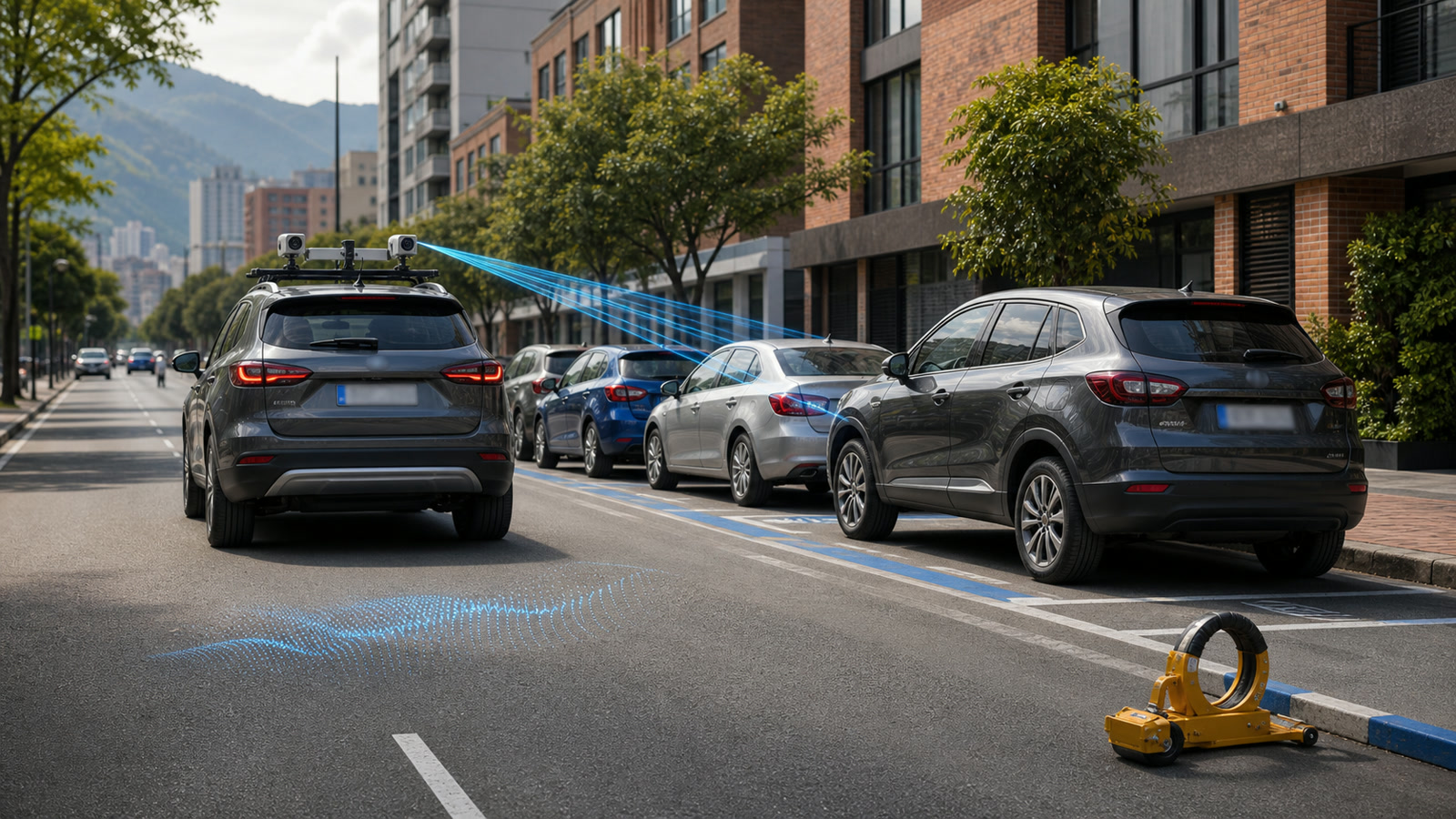
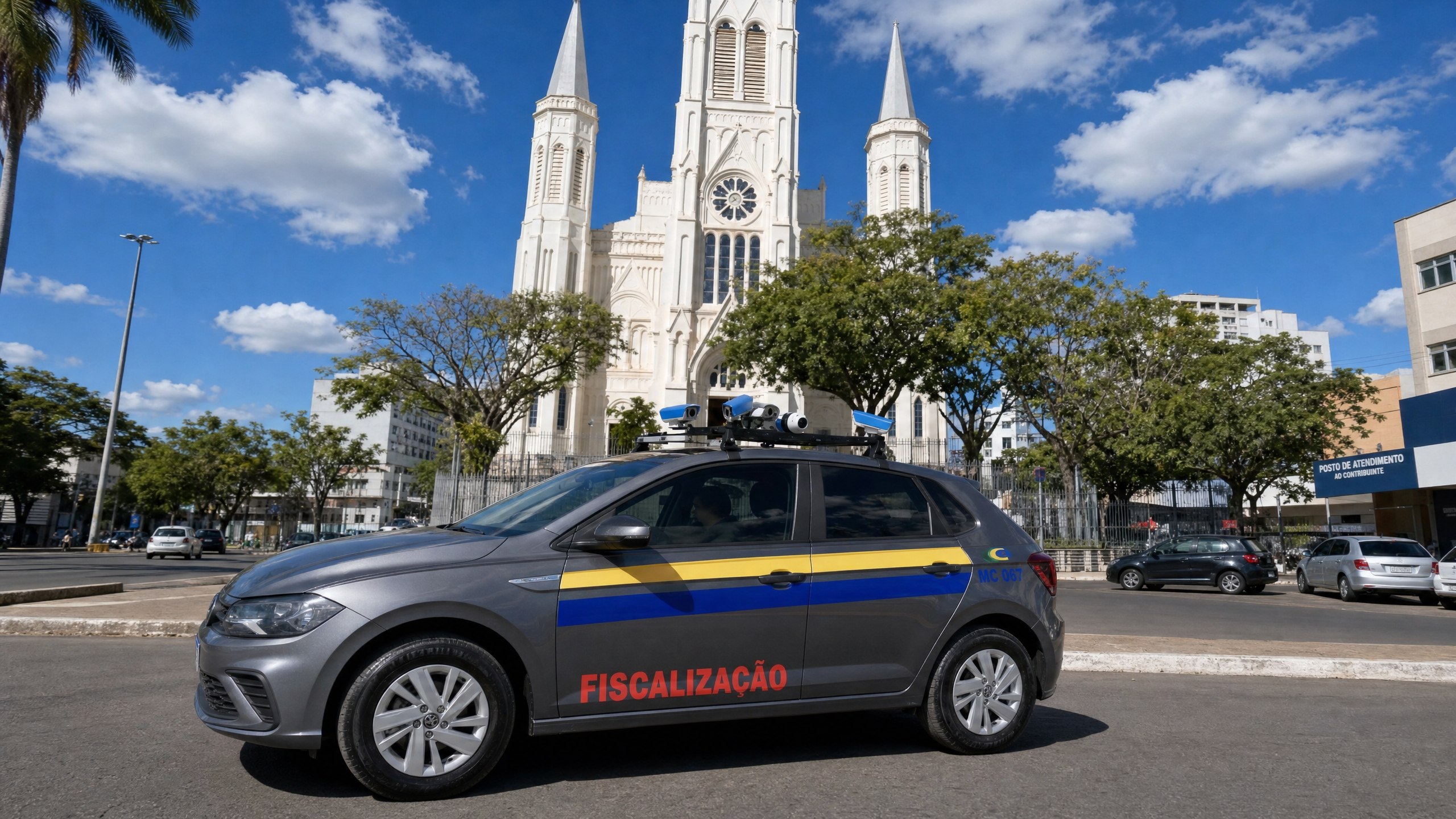
Olho Vivo Patrol performs mobile OCR reading and produces plate, image, date, time, and location records along the route. The system checks the available activation context, but a reading or discrepancy does not issue a citation automatically.
AreaChain preserves the integrity and sequence of selected events. Olho Vivo City centralizes the operational view, and Electronic Ticketing integrates the workflow used by officers. These layers support review and audit; they do not replace original-file preservation, access controls, or MCTrans decisions.
Why this matters for Montes Claros
The report links digitalization to greater parking turnover and includes comments from retailers and drivers about space availability and convenience. These are statements attributed to the operation and perceptions from the people interviewed; they are not a controlled performance measurement.
The technical case separately documents the multi-app platform, proof of concept, OCR reading, and reconciliation flows. Outcomes observed in Montes Claros depend on the contract and local execution and do not constitute a guarantee for other cities.
In the documented operation, Olho Vivo Parking organizes rules, tickets, and reconciliation; Olho Vivo Patrol performs mobile reading; and AreaChain preserves the sequence of selected events. Each product has a bounded role and does not replace MCTrans supervision or decisions.
Brazilian technology, real-world operation
At company scale, Areatec reports operating the world's largest OCR vehicle fleet. It also reports more than 600 million transactions per year and more than 307.7 million OCR license plate reads per year. These are company-wide aggregates: they do not measure Montes Claros in isolation or quantify the local effect on turnover or commerce.
The documented model separates responsibilities: the city and MCTrans regulate and supervise the operation; accredited apps and physical outlets serve drivers; and Areatec supplies the contracted technology stack. OCR reading signals the context found, while officers and the authority remain responsible for review and any subsequent action.
The news report and the technical case answer different questions. The first records experiences perceived by users and retailers; the second documents scope, products, and responsibilities. Keeping those sources separate makes the account verifiable.
Want to know more?
Read the Montes Claros technical case, explore Olho Vivo Parking to evaluate the operating software, and see Olho Vivo Patrol to understand mobile OCR capture. If you represent a city or operator, talk to our team about your setting.
Reference: Área Azul Digital aquece o comércio do centro de Montes Claros ao acelerar a rotatividade de vagas — Diário do Comércio, June 2, 2026.